Asaltat de fani care vor să-l vadă, să-i vorbească şi să-l încurajeze în puşcărie, Tolea Ciumac şi-a făcut blog prin care împărtăşeşte internauţilor impresii din celulă.
“O zi la puşcărie = un pic mai bine ca în iad. Plictiseală, neputinţă, ciudă, mizerie. În bine nu te schimbă niciodată, dacă nu ai un caracter puternic. Şi, dacă- l ai, te doare că pierzi timp în care ai putea face ceva mai bun afară. În rest, mizerie, mizerie, mizerie …” Acestea sunt impresiile pe care Tolea Ciumac le scrie pe blogul său www.toleaciumac.ro De pagina sa electronică se ocupă un bun prieten de-al luptătorului, care îl vizitează periodic.
Showing posts with label beautiful romania. Show all posts
Showing posts with label beautiful romania. Show all posts
Thursday, May 21, 2009
Tolea Ciumac şi-a făcut blog
Sunday, May 17, 2009
Mădălin Voicu, tată pentru a şasea oară
Carmen, iubita lui Mădălin Voicu, a născut sâmbătă un băieţel de 3,550 kg, care a primit nota 10. Micuţul şi mămica se simt foarte bine şi vor pleca în curând acasă, unde totul îi aşteaptă gata pregătit.
Surse medicale au mărturisit că pe Carmen au apucat-o durerile facerii vineri noaptea, iar sâmbătă copilul a venit pe lume. Numele ales este Ştefan, "ca pe Mădălin", după cum ne-a mărturisit mămica.
"Toţi băieţii mei se numesc Ştefan. Este un fel de "pedigree". Normal că sunt fericit. Să vină acasă, să fie sănătos, să ne putem ocupa de el. Pentru mine, copilul este sfânt" , a spus deputatul care mai are patru copii recunoscuţi şi alţi doi din relaţii din tinereţe.
Wednesday, May 13, 2009
Moldavian and Bucovinian Cuisine
This region lies in the north-eastern part of Romania and historically speaking it suffered few foreign influences from people who came to conquer these lands or to trade with natives. They managed to influence more or less the local culture. The Byzantine Empire and later on Greeks left some culinary marks in Moldavia – a large variety of sweets, some spicy dressing with various flavours or the Mediterranean habit of using dry wine to cook some dishes.
Turks (when the region came under their influence between the 16th and the very beginning of the 19th century) left one of the most powerful imprints on the local cuisine: the use of mutton on a large scale and dishes like musaca or hotchpotch (ghiveci). We should not forget the Russians: they left us something too - pickled vegetables and a lot of baked dishes and baked cakes. Nowadays the Moldavian cuisine is considered as being one of the most subtle of our country. Because of some Mediterranean influences (from Greeks) it is much lighter than for instance the Transylvanian one and it is also very tasty.
People in this part of the country eat a lot of soups; chicken soup is at high esteem among these (like it is the use of white meat – chicken and fish) and borsch (a homemade fermentation liquid obtained from bran and water) is largely used to get a slightly sour taste to soups. “Ciorba de potroace” (a kind of sour soup) is also particular in this area. It is made of chicken giblets boiled together with carrots, onion, rice, parsley and it is seasoned with borsch – people say this soup makes an excellent medicine for hangovers.
The traditional “sarmale” are to be found all over the regions but they have something specific every part of the country. They are very small in Moldavia as one can easily obtain 8 to 10 sarmale from one single leaf of cabbage and the meat used to fill the “sarmale” is usually a mixture of pork and beef. Some Moldavians would also use vine leaves apart from sauerkraut to prepare their sarmale. Bean soup, stewed cabbage or “iahnie” (particular dish made of dried beans) are among the favorite meals of these people.
We should mention Moldavian “tochitura” too (chopped pork meat – liver and kidneys – mixed with lard, garlic, pepper and of course a glass of wine; everything is fried and simmered) which is always served with polenta.
Pies are traditional as desserts and they have extremely diverse shapes and tastes. Some of the best known pies are filled with cheese (cheese, especially mutton cheese is very much used in the Moldavian cuisine), sauerkraut, pumpkin, apples or comfiture. Donughts, dumplings, some kind of panettone, mucenici, pasca and pancakes enrich the list of local sweets which is anyway very large. Another local figure are walnuts – these fruits are used for a lot of cookies in Moldavia.
Friday, May 8, 2009
Mircea Badea
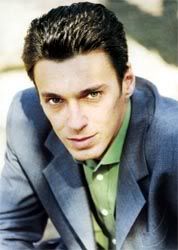
Mircea Badea was born on February 24, 1974 in Bucharest, Romania. He is a famous Romanian actor and tv presenter.
Biography and Career :
After finishing "Liceul de Informatica" from Bucharest he attended the Faculty of Cybernetics.
Mircea Badea started his career with a collaboration with Tele 7 abc and after that he got a lot of proposals from a lot of televisions. In his career he worked for : Antena 1, Realitatea TV, Pro TV, Prima TV and finally he returned to Antena 1 for a TV Show named "In gura presei".
He returned to Antena 1 because he likes very much reading newspaper and commenting them and that's why he owns the show "In gura presei".
In the movie "Milionari de weekend", Mircea Badea's role is a TV Star with a lot of indebtedness to dangerous people. His girlfriend role is no one else than Kitty Cepraga. Another important role is played by Oreste who is Mircea's best friend and in the past they both had a TV Show on Antena 1. Oreste's role in the movie is Fane Satar - a local mob. The soundtrack of the movie is played by Parazitii - a Romanian hip-hop band.
Trivia :
- He is a very humoristic person.
- He can't stand foolishness.
Quotes :
- You fight the samurai style with a samurai opponent and you fight evil with the evil ones.
- I have a lot of shortcomings but I don't recognize them all
- I can't stand alcohol.
Filmography :
1. Milionari de weekend (2004) - his role was a TV Star
2. Oglinda (1993) .... Foot amputee
.. aka Inceputul adevarului (Romania)
... aka The Mirror (International: English title: literal title)
Thursday, May 7, 2009
The Girl Fair of Mount Gaina

Near Mount Gaina you’ll witness one of the most interesting traditions of Romania: the Gaina Girl Fair, taking place each year in the Sunday closest to July 20. Known as "targul de fete", this is the greatest outdoor holiday of the country and it hosts the greatest traditional song and dance groups from Romania.
The history of this celebration was lost in the mist of time, but Mount Gaina was mentioned by Strabon, "the father of geography", who claimed that Dacians had a "cogaiom" mountain near their capital, Sarmisegetuza, where they made their sacrifices. Gaina is probably the peak where Dacians invoked their Gods and offered them such sacrifices. The girl fair is first mentioned officially in 1816 with people from all over Romania taking part in it, specially those from the Bihor, Aries and dwelling near the river Crisul Alb. They’ll exchange traditional products, like food or clothing and have a good time singing old songs and taking part in dances. This place is not only a symbol of Dacian traditions, but also one of the landmarks of the local "gold rush", as the precious metal seemed to have been widespread in this area. Christian tradition placed this holiday in the second decade of July, so it'll be close to the celebration of Saint Ilie. The girl fair of Mount Gaina also has economical reasons, like the need of buying or selling various products, including girls, but only symbolically. The festivities of the girl fair take place in a beautiful local forest, surrounded by fir trees and situated at 1467 metres altitude. There's also a romantic and ethnic motivation of the fair, as young people who live in very remote regions get together in this celebration, meet each other and sometimes fall in love and get married. In the past, girls would arrive at the fair with their dowry on their horses and the marriage was done on the spot by priests who came to mount Gaina for this purpose alone.
Today, the Mount Gaina fair is just a great local celebration, which takes a couple of days of preparation. It starts with the "tulnicarese" group of Avram Iancu, followed by various artistic programmes, which last till night kicks in. Among the dances on Mount Gaina there are the passionate "tropotite" played by mocani or "tarina", a dance for pairs and the most famous of locals, also known as "moti". There are variations of this dance, as, for example, the Abrud tarina is played elegantly and slowly with wide arm movements, lots of walking around and spinning the girl underneath the man's hand. For tourists, the fair is the perfect place to buy unique local products, like musical instruments, wooden vases, ceramic ornaments, wooden tools or clothing items and culinary products.
Wednesday, May 6, 2009
Alarm at EU passports for Moldova
The EU will this week launch talks with six Eastern European neighbours on closer relations - including Moldova, which only last month was rocked by violence following a disputed election.
Moldova is Europe's most impoverished country and its 4.1 million people can only travel to the EU if they have a special visa. But Romania has offered passports to up to one million Moldovans - alarming both Moldova and some in the EU, says the BBC's Oana Lungescu.
Step into the ornate building of the central post office in the Moldovan capital, Chisinau, and you see small crowds of people huddling around a big marble-topped table.Each one is filling out an application for Romanian citizenship. Dozens more queue up to get the forms; others wait in line to post them to the Romanian embassy.
"It's because we haven't got work here," one woman says. "We want to look for work in Romania or Europe. With a Romanian passport it's going to be easier."A young man in the queue says a Romanian passport is "a chance to see the world".
"I want to raise my family in Moldova, but I also want to travel, meet new people," he adds. "This is my future."
Law changes
Around 1,000 people a day have come to the post office in the past few weeks, since Romania changed its citizenship law to speed up procedures for Moldovans, following the violent anti-government riots that erupted in the former Soviet republic last month after a disputed election.
The change was initiated by President Traian Basescu in an unusual tit-for-tat move after his Moldovan counterpart, Vladimir Voronin, accused Romania of backing the protesters, expelled its ambassador and re-introduced visa requirements for Romanians.
Mr Basescu said he could not allow "a new Iron Curtain" to descend on the border with Moldova, most of which was part of Romania until it was annexed by the Soviet Union in 1940.
The decision may be political bluster ahead of Romania's presidential election later this year, but some commentators said Mr Basescu was trying to leave Mr Voronin "without people".
The changes are clear enough.
The language test has been scrapped, as Moldovan is practically the same as Romanian anyway. Anyone with a great-grandparent who was once a Romanian national can apply and expect an answer within five months.
Until now, only a few thousand requests were approved every year - so envelopes have been piling up at the Romanian embassy in Chisinau.
Speaking on Romanian TV, President Basescu said there were 650,000 envelopes, but some enclosed several applications.
He estimated the number of those who wanted to become Romanian citizens at up to one million, a quarter of Moldova's population.
'Common history'
Outside the embassy, there is hope, uncertainty - more people waiting in line.
Nadia Codreanu, an accountant, sent her request in 2002.
"I really hope it will be easier, and that in half a year I will get the Romanian passport," she says.
"Moldovans feel Romanian because you can't just forget many centuries of common history and say we have nothing in common with Romania".What she does with her passport will depend on what happens in Moldova.If the authorities increase pressure on the pro-Western opposition, Nadia explains, she may leave the country.
More than 100,000 Moldovans hold Romanian passports, but even more are believed to have Russian citizenship, especially in Moldova's breakaway region of Trans-Dniester, which enjoys Moscow's backing.Despite almost two decades of independence, Moldovans still appear divided about who they are and whether their country should get closer to Russia or the West as it grapples with a deepening economic and social crisis.
For Vladimir Turcanu, an MP from the ruling Communist Party, it is not a question of identity, but of outside intervention.
"This mass granting of the Romanian citizenship is a way to assimilate the Republic of Moldova," he says.
"We see it a threat to the statehood, a threat to the integrity and sovereignty of our country."
'Destabilising'
Under EU laws, Romania is entitled to give citizenship to anybody it likes, just as Spain granted legal papers a few years ago to 600,000 irregular migrants.
Spain also allowed citizenship applications for up to 500,000 descendents of people who went into exile after its civil war.
But it is Romania's move that has triggered most concern.
Senior EU diplomats call it unwise, risky and destabilising.
Amid fears that up to a million impoverished migrants could enter Europe through the back door, Romanian Foreign Minister Cristian Diaconescu reassured other EU members on Friday that decisions would be taken on a case-by-case basis and that many people would not qualify.
Romanian diplomats say only 20,000 cases are in the pipeline, because many Moldovans have failed to complete the complex application procedures.
Whatever the figures turn out to be, there is a clear risk that Moldova, already weakened by the conflict in Trans-Dniester and an economy on the brink, could become a chronic source of instability on Europe's eastern border.
Unparalleled exodus
The EU envoy for Moldova, Kalman Mizsei, thinks the real answer would be to allow all Moldovans to travel to the EU without a visa.
"Moldova's situation," he says, "differs from any other and therefore we, the European Union, also need to have bold initiatives here that would give the perspective of a visa-free situation for the Moldovans.""That's an issue of core importance for Moldova as a state."
It is not a call that EU interior ministers want to hear.
Germany and others say Moldova has little prospect of visa-free travel for the next three to five years.
But one million Moldovans have already left, often without legal papers, in search of work and a better future. It is an unparalleled exodus.In Chisinau's bustling market, an old woman selling a few bunches of parsley told me that all seven of her children had left to work in Romania, Italy and Russia.
It is a story you hear across the country. For with or without Romanian passports, Moldovans are choosing to vote with their feet.
Story from BBC NEWS
Tuesday, May 5, 2009
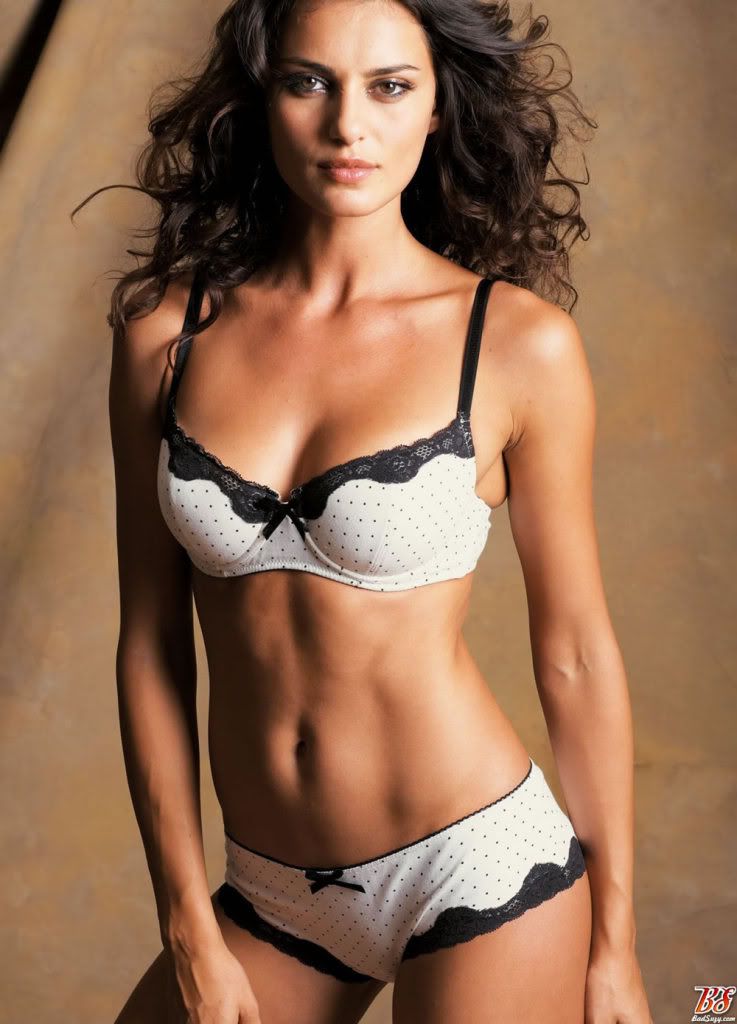
Catrinel Menghia
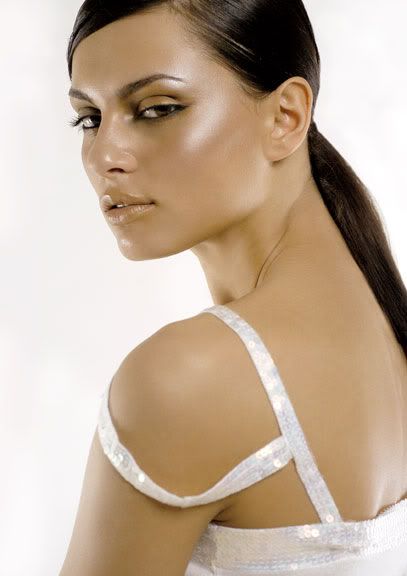
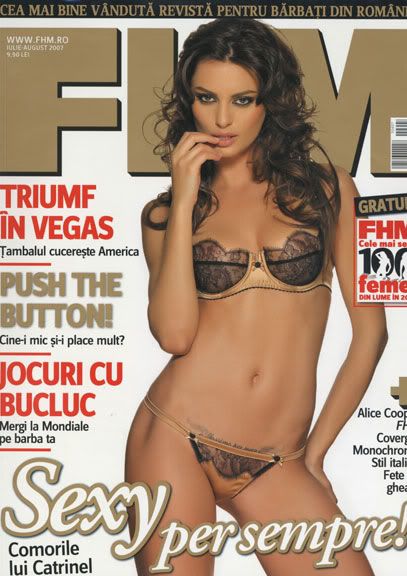
Catrinel Menghia (born October 1 1985)is a Romanian model.
She was discovered at the age of 16 on the street by a local agent who took her to Bucharest to meet Liviu Ionescu of the MRA Agency. Six months later, her parents allowed Menghia to move to Bucharest and start her modeling career.She participated in the Ford Supermodel of the World Romania contest in November 2001, where she won the second runner-up prize.Menghia now lives in Milan. She has done campaigns for major fashion houses and is the face of Giorgio Armani worldwide. She was also one of the new faces in the 2006 South African Sports Illustrated. Swimsuit Edition and has appeared in FHM and Maxim. She has been the face of the French lingerie brand Lise Charmel since 2005.
Corvinilor Castle
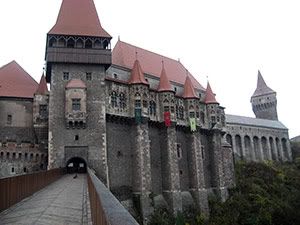
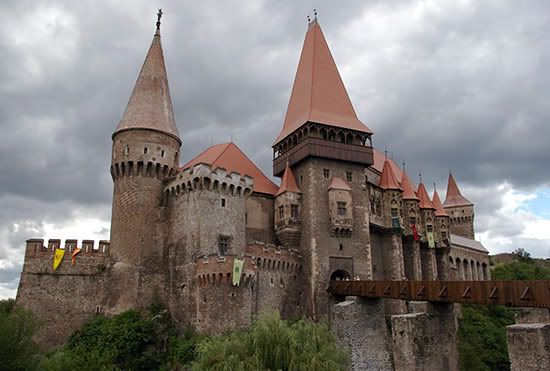
Built in the 14th century, Corvinilor Castle represents one of the most amazing and well-preserved medieval buildings, being in fact the most famous property of Iancu de Hunedoara, building that even today dominates the city of Hunedoara.
Iancu de Hunedoara was the one who stopped the Turkish army at Belgrad in their rise towards Europe, after conquering the Constantinople in 1456. Only a few know that even today the bells of the Catholic Churches still toll in the middle of the day for this victory, as a decision of the Vatican Church.
The Corvinilor Castle is one piece of a kind because of the special styles in which it was built and because of the presence of some military innovations. It is also known that people led a very impetuous life there at the castle for more than 400 years. This building suffered along the years various changes and during Iancu de Hunedoara’s reign, the castle became also a luxurious home, not only a strategic point.
The castle has 42 chambers, 2 platforms, 2 bridges and is built on an area of 7000 square m.
The access to the castle is made on a wooden bridge which is sustained by 4 massive stony piers that are placed in the riverbed of Zlasti, leaving behind the Hussan’s Court and the niche that shelters the statue of St. John de Nepomuk, the protector of bridges. From there you can see the new rectangular-shaped stony tower (Turnul nou de poarta) which is impressive by its great size. You can also visit the prison of the castle where Vlad Tepes was supposed to have been kept as prisoner. On the left side, just as you get out of the stony tower, you can see Loggia Matia at whose floor one can see the only secular fresco dating the Renaissance and also The Golden Chamber where one can see “Items of the collection of the museum from the Corvinilor Castle”. At first, the museum exhibitions focused only on the Middle Ages items, but in short time, these approached other fields, such as archaeology, ethnography, decorative art and ancient books.
At the first level of the New Gate Tower, you can find the “Princesses’ Living Room” (Camera Domnitelor) where you can see pieces of furniture belonging to the 19th century: a table, a sideboard and a cupboard. Across the spiral staircase, one reaches the Council Hall (Sala Dietei), which is built in late gothic style. At the exit, the staircase leads to the floor where the Capistrano Tower is situated. To the right there is another staircase that leads to the second level of the Southern Palace, to the rooms that were used in the 18th century as offices for the iron mines Administration of Poiana Rusca Mountains.
In the yard, near the well, one can also visit the artillery platform, which was neatly rearranged in the 19th century. From there you have a pleasant view over the Bears’ Pit, the Northern Palace, the chapel and the courtyard of fountain.
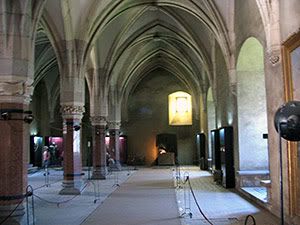
The last sight, the Knights Hall (Sala Cavalerilor), one of the most interesting laic spaces in 15th century Transylvania, is situated in the Western side of the castle, at the ground floor of the Great Palace. It is divided into two sectors by a row of octagonal columns. This hall served as dinning room for festive occasions or as judgment and council room for noblemen, after the German model.
“You have water, but you have no soul”
In the vicinity of the entrance of the church, there is a fountain which was dug in stone by three Turkish prisoners. The legend says that when these three prisoners were captured by Iancu de Hunedoara from his battles against the Turkish army, they were told that if they dug in stone and reached for water, they would be released. For ten years the Turkish prisoners dug nearly 20-25 meters into stone and they finally reached for water, but instead of being released, they were beheaded. This is just a legend and it’s not specific only to Corvinilor Castle. Before being executed, it is said that one of the prisoners had carved into stone the following words: “You have water, but you have no soul”. The truth is that one of the prisoners, which was in fact the son of a vizier, carved on one of the stones from the wall near the well that he built that well together with two other prisoners while they were prisoners to these giaours.

Saturday, May 2, 2009
Women’s Cave

Among the thousands of caves in the Carpathians Mountains, only a few had such a rich past in events as the Woman Cave (Pestera Muierii) from Baia de Fier had. Situated in a wild place, having more than just one entrance, the Woman Cave was a natural fortress, a resistance point for the inhabitants of the neighboring settlements over their struggling history. One of the entrances offers an excellent observation point over the field from the South and another entrance opens the view to the dense forests of the Parang Mountains.
The electrification established between 1963 and 1978 changed the cave in the most popular and visited speleological objective from Romania. Even if, what the dimension, the beauty and the quality of the arrangement are concerned nowadays, the Woman Cave, with an aggregate length of galleries of over 3,500 m, was surpassed long time ago, it continues to be the headline of the Romanian speleotourism, being visited by thousands of visitors every year. Situated nearby, but at higher levels of karsti-fication, are also other caves of smaller dimensions, such as the Corbului Cave, Parcalabului Cave and Iedului Cave known under the name of the Baia de Fier Caverns.
It seems that the first written record about the Woman Cave dates back to 1870, when the archaeological Al. Odobescu mentioned it in an archaeological questionnaire. Since then, in over 100 years of researches, an important and varied scientific and documentary material has been collected , attesting to valuable archaeological, paleonthological, geomorphologic, as well as biospelaeological and mineralogical finds. These form together over 95 % of the 3,566 m aggregate length of the cave galleries. For practical reason and because of the superposed location of the galleries, we call them the upper and lower storey. The general north-south orientation of the whole system of galleries runs along the fissure which allowed the waters of the Galbenul River stream to dig them in the rocks. You may enter the cave through three different points, a northern, eastern and southern mouth. The last two entrances are the places of resurgence of the waters of the former underground stream which once flowed through the northern slope. Nowadays the Galbenul stream has abandoned its underground course and the karstification process is continued only by the percolation waters provided by rainfalls or snow melts.
On entering the cave through its northern gate, at about 130 m within you find yourself in front of the Small Dome-shaped stalagmite from which widens on your left the Altar Chamber, rich in concretions with a ceiling ending in a 17 m high swallow hole. Walking in the same direction, a gallery with numerous boulders lying on the floor leads to the eastern mouth, called the Altar Gate, which opens into the abrupt slope of the Galbenul Gorge. The main gallery, known as the Electrically-lit Gallery, continues southwards and gets more and more spectacular because of its numerous ceiling concretions and basins, sometimes filled with water, in the portions, called the Small Basins and the Large Basins. Two hundred and seventy meters farther you enter the Turk’s Chamber, one of the most beautiful parts of the upper floor. Huge stalagmites, domes, wall and ceiling concretions taking the strangest shapes are known as Father Christmas, the Turk, the Turk’s wife, etc.
Passing through a narrow corridor and over a threshold by climbing a metal ladder, you enter the so-called Chamber of Wonders, because of its numerous microbasins and candle-shaped stalactites and stalagmites, which adorn it. On coming back to the main gallery you will walk on through the Small Gate, a portion where the walls and ceiling draw very near, leaving only a small passage and you will enter the Guano Chamber. On the eastern wall make out a whole network of galleries, a real place of refuge for the cave fauna, since it is less accessible to visitors, and not yet electrified. From the Guano Chamber on there is only a 40 m’ s distance to daylight, passing through the southern gate, which opens, into the slope facing the largely terraced meadow. The lower floor, divided into two sectors by alluvial silting, is of particular scientific interest. For this reason it was declared Speleological Reserve in 1955 and the Woman Cave, aMonument of Natural Reserve.
The northern sector, made up of a network of labyrinthine galleries totals a length of 1,650 m. you may enter it through a narrow connecting gallery, opened in the western slope of the upper floor at about 30 m within from the northern entrance. After crawling along a short portion and going down a 2 m deep step you reach a small chamber from whose north-western corner an 18 m deep swallow-hole takes you to the Electrician’s Gallery. It is rather difficult to describe this sector of the cave owing to the cross-connexions of its galleries. Nevertheless you may make out a western system with the Electrician’s Gallery as a main chamber, and an eastern system with the Excentric’s and Basin Galleries as principal rooms. They are characterized by a high degree of alluvial silting and the presence of potholes of different depths varying between 10 and 15 m, as well as an exceptional variety of concretions. They reach a climax in the Red Chamber of daylight, a rare mineral species found in caves, made up of calcium phosphocarbonate and taking all the known shapes in calcite: stalagmites, stalactites, curtains, wall and floor concretions, rimstone pools, etc.
The Bears’ Gallery was named thus because of its numerous skeleton remains of the Quaternary fossils of mamalia, belonging mostly to cave bears. Its great variety and numerous calcite concretions make it quite remarkable. Its walls are also adorned with corrosion hieroglyphs, leopard skins, wall plates and spoons. The Pearl Chamber has a low ceiling, in some places under I’m, and displays a lovely folded curtain right at its entrance, known as the Bride’s Veil. The floor looks mosaic-shaped on account of its many crystals and contains numerous cave pearls. If, instead of going down the first metal ladder towards the southern sector, you would go left and climb a 2.5 m-high step, you would reach the so-called Mousterian Gallery. It is the place where archaeologists found evidence that the cave was inhabited by man in Middle and Higher Paleolithic times.
Legend
The electrification established between 1963 and 1978 changed the cave in the most popular and visited speleological objective from Romania. Even if, what the dimension, the beauty and the quality of the arrangement are concerned nowadays, the Woman Cave, with an aggregate length of galleries of over 3,500 m, was surpassed long time ago, it continues to be the headline of the Romanian speleotourism, being visited by thousands of visitors every year. Situated nearby, but at higher levels of karsti-fication, are also other caves of smaller dimensions, such as the Corbului Cave, Parcalabului Cave and Iedului Cave known under the name of the Baia de Fier Caverns.
It seems that the first written record about the Woman Cave dates back to 1870, when the archaeological Al. Odobescu mentioned it in an archaeological questionnaire. Since then, in over 100 years of researches, an important and varied scientific and documentary material has been collected , attesting to valuable archaeological, paleonthological, geomorphologic, as well as biospelaeological and mineralogical finds. These form together over 95 % of the 3,566 m aggregate length of the cave galleries. For practical reason and because of the superposed location of the galleries, we call them the upper and lower storey. The general north-south orientation of the whole system of galleries runs along the fissure which allowed the waters of the Galbenul River stream to dig them in the rocks. You may enter the cave through three different points, a northern, eastern and southern mouth. The last two entrances are the places of resurgence of the waters of the former underground stream which once flowed through the northern slope. Nowadays the Galbenul stream has abandoned its underground course and the karstification process is continued only by the percolation waters provided by rainfalls or snow melts.
On entering the cave through its northern gate, at about 130 m within you find yourself in front of the Small Dome-shaped stalagmite from which widens on your left the Altar Chamber, rich in concretions with a ceiling ending in a 17 m high swallow hole. Walking in the same direction, a gallery with numerous boulders lying on the floor leads to the eastern mouth, called the Altar Gate, which opens into the abrupt slope of the Galbenul Gorge. The main gallery, known as the Electrically-lit Gallery, continues southwards and gets more and more spectacular because of its numerous ceiling concretions and basins, sometimes filled with water, in the portions, called the Small Basins and the Large Basins. Two hundred and seventy meters farther you enter the Turk’s Chamber, one of the most beautiful parts of the upper floor. Huge stalagmites, domes, wall and ceiling concretions taking the strangest shapes are known as Father Christmas, the Turk, the Turk’s wife, etc.
Passing through a narrow corridor and over a threshold by climbing a metal ladder, you enter the so-called Chamber of Wonders, because of its numerous microbasins and candle-shaped stalactites and stalagmites, which adorn it. On coming back to the main gallery you will walk on through the Small Gate, a portion where the walls and ceiling draw very near, leaving only a small passage and you will enter the Guano Chamber. On the eastern wall make out a whole network of galleries, a real place of refuge for the cave fauna, since it is less accessible to visitors, and not yet electrified. From the Guano Chamber on there is only a 40 m’ s distance to daylight, passing through the southern gate, which opens, into the slope facing the largely terraced meadow. The lower floor, divided into two sectors by alluvial silting, is of particular scientific interest. For this reason it was declared Speleological Reserve in 1955 and the Woman Cave, aMonument of Natural Reserve.
The northern sector, made up of a network of labyrinthine galleries totals a length of 1,650 m. you may enter it through a narrow connecting gallery, opened in the western slope of the upper floor at about 30 m within from the northern entrance. After crawling along a short portion and going down a 2 m deep step you reach a small chamber from whose north-western corner an 18 m deep swallow-hole takes you to the Electrician’s Gallery. It is rather difficult to describe this sector of the cave owing to the cross-connexions of its galleries. Nevertheless you may make out a western system with the Electrician’s Gallery as a main chamber, and an eastern system with the Excentric’s and Basin Galleries as principal rooms. They are characterized by a high degree of alluvial silting and the presence of potholes of different depths varying between 10 and 15 m, as well as an exceptional variety of concretions. They reach a climax in the Red Chamber of daylight, a rare mineral species found in caves, made up of calcium phosphocarbonate and taking all the known shapes in calcite: stalagmites, stalactites, curtains, wall and floor concretions, rimstone pools, etc.
The Bears’ Gallery was named thus because of its numerous skeleton remains of the Quaternary fossils of mamalia, belonging mostly to cave bears. Its great variety and numerous calcite concretions make it quite remarkable. Its walls are also adorned with corrosion hieroglyphs, leopard skins, wall plates and spoons. The Pearl Chamber has a low ceiling, in some places under I’m, and displays a lovely folded curtain right at its entrance, known as the Bride’s Veil. The floor looks mosaic-shaped on account of its many crystals and contains numerous cave pearls. If, instead of going down the first metal ladder towards the southern sector, you would go left and climb a 2.5 m-high step, you would reach the so-called Mousterian Gallery. It is the place where archaeologists found evidence that the cave was inhabited by man in Middle and Higher Paleolithic times.
Legend
There are two legends related to the name of the Woman Cave:
The first one says that, long time ago, when men used to dominate everything and to go defend the land against the invaders, women used to take in haste the children and old people into the cave , which was know at that time only them (women). There they used to stay until the battles were over. The second version says that this name-the Woman Cave would derive from the fact that in the days dominated by draught in summer, the women used to sit in front of the mouth of the cave and spin the wool. The air that came out of the cave used to facilitate the work of spinning the thread. Others affirm that the women used to even go inside the cave, where they used to melt the flax and the hemp.

Thursday, April 30, 2009
Laura Cosoi

Laura Cosoi was born on January 2, 1982 in Romania. She is a famous Romanian actress.
Biography and Career :
Laura Cosoi started her acting career having a role in the La Bloc Tv Series on Pro Tv. Her role in the movie is Adina - a simple-minded and naive blonde girl. She is a beautiful and passionable girl but unfortunately she believes all the stupid things she hears. Her friends trick her easily so that she always takes care of all the things in house.
Quotes :
- When I was a kid, I used to have a small boutique just in front of my house. I used to sell the sweets my father brought me, my clothes, my cousin's clothes and many other things.
- I feel sexy, I dress sexy, I'm a sportive woman, I dress sport and I pay attention the way I look.
- I don't like to stay 2 hours in front of the mirror like other women. I like to combine different styles of fashion like classic and elegant. I like to feel confortable and I love quality clothes, they make me smile.
- I love shopping. I have a huge shoes collection. I usually do shopping when I leave country because I want to have were to choose from.
- I try to dress different from others around.
- I guide myself after new fashion trends when choosing the right clothes.
- When I'm wearing a pair of jeans and a t-shirt, I want them to be quality and to have a message. Even if I dress simple clothes I want to be fancy in them.
Trivia :
- In March 2006 she appeared in Playboy
- Her boyfriend is Smiley (romanian singer)
Filmography :
- Fete cu lipici (Serial TV) (2005) - Adina
- La bloc (Serial TV) (2002) - Adina

Subscribe to:
Posts (Atom)


 Posts
Posts